
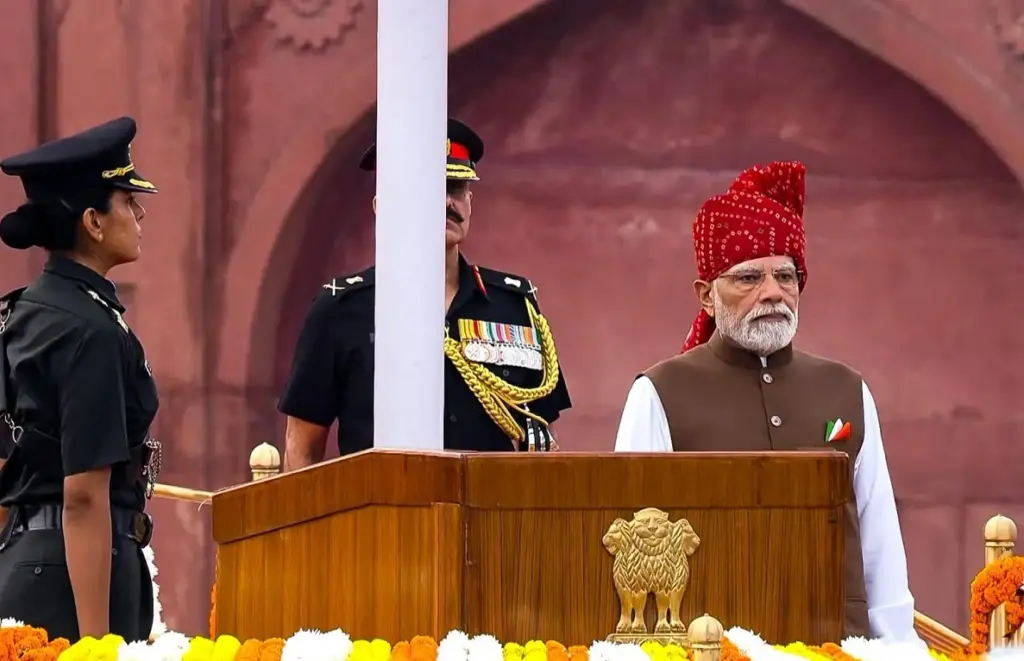
Narendra Damodardas Modi has held the office of Prime Minister of India since May 2014, a tenure that’s now stretched across three consecutive terms — a feat no leader had managed since Jawaharlal Nehru in the country’s early decades. Whatever one’s view of his policies, that alone makes his time in office a significant chapter in modern Indian political history.
Early Life and Political Roots
Modi was born on September 17, 1950, in Vadnagar, a small town in Gujarat. He went on to earn a B.A. and later a Master’s degree in Political Science, studying at Gujarat University and Delhi University. Long before he held elected office, he was active within the Rashtriya Swayamsevak Sangh (RSS), an organisational background that shaped much of his early political grounding before he formally joined the Bharatiya Janata Party.
From Gujarat to the National Stage
Modi’s rise through the BJP’s ranks eventually led him to serve as Chief Minister of Gujarat from 2001 to 2014, a role that put him at the center of the state’s economic development narrative for over a decade and established him as one of the party’s most prominent leaders heading into the 2014 general election.
That election delivered the BJP a parliamentary majority — the first for any single party in India since 1984 — and Modi was sworn in as the country’s 14th Prime Minister on May 26, 2014. He was re-elected in 2019 and again in 2024, taking the oath of office for a third term on June 9, 2024, and currently represents the Varanasi constituency in the Lok Sabha.
Governance Focus
Modi’s tenure has been closely associated with a handful of large-scale policy pushes: economic reforms including the Goods and Services Tax (GST) and financial inclusion programs, infrastructure expansion, and an emphasis on digital governance aimed at making public services more accessible. His government has also placed a strong emphasis on India’s global positioning, with the country’s diplomatic and economic profile expanding significantly over the course of his premiership.
A Prolific Communicator
Beyond formal policy, Modi has built one of the most active social media presences of any world leader, using it to communicate directly with citizens and share updates on government initiatives. He’s also known for his periodic radio addresses and published writing, including a collection of poetry reflecting on nature, spirituality, and patriotism.
Quick Facts
- Full Name: Narendra Damodardas Modi
- Born: September 17, 1950, Vadnagar, Gujarat
- Education: B.A. and M.A. in Political Science, Gujarat University and Delhi University
- Current Role: Prime Minister of India (since May 2014)
- Constituency: Varanasi, Uttar Pradesh
- Party: Bharatiya Janata Party (BJP)
How Citizens Can Officially Reach the PMO
For grievances, suggestions, or official correspondence, the government provides dedicated public channels rather than direct personal contact:
- PMO Public Grievances Portal: pmopg.gov.in
- Official PMO Website: pmindia.gov.in
- Personal Website: narendramodi.in
Where to Follow Him
- X (Twitter): x.com/narendramodi
- Facebook: facebook.com/narendramodi
- Instagram: instagram.com/narendramodi
- YouTube: youtube.com/@NarendraModi
- LinkedIn: linkedin.com/in/narendramodi
Frequently Asked Questions
How can citizens raise concerns with the Prime Minister’s Office? Through the official PMO Public Grievances Portal (pmopg.gov.in), which is the designated channel for complaints, suggestions, and correspondence.
What is Modi’s political background? He served as Chief Minister of Gujarat from 2001 to 2014 before becoming Prime Minister, and was active in the RSS earlier in his political life.
How many terms has he served as Prime Minister? He is currently in his third consecutive term, having first taken office in May 2014.
What constituency does he represent? Varanasi, Uttar Pradesh.